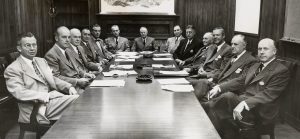
We are asking the wrong questions and counting the wrong things, according to Steve Phillips’s article – why are straight white men overrepresented in positions of power. His take is to stop asking why marginalized groups are underrepresented in our board rooms and senior leadership – instead ask why straight, white men are overrepresented. He points out that straight white American men are approximately 29% of the US population. So how come that 29% are sometimes the only demographic in a board room? And what can we do about it?
Things are not dissimilar here in Aotearoa New Zealand. In the 2023 census, 67.8% of residents identified as European, which implies approximately 33% of the population are European males, with the straight white male percentage slightly less again. And yet, a NZ Institute of Directors analysis shows that men make up 69% of director positions across NZX-listed companies, and, although recent data is hard to find, this analysis from Simplicity KiwiSaver found that only “six of the Top 100 companies reported having Māori board members”.
This overrepresentation of white men in positions of power matters. Why? Equity, for one thing – why should one demographic dominate the rest of us? Effectiveness for another – for example this 2023 McKinsey study of 1200 companies and 23 countries found that organizations in the top quartile for ethnic and racial diversity were more profitable than the rest.
By changing the question to why are straight white men overrepresented in positions of power, we also change the solutions. It becomes clear that, to rebalance things and make space for others, it would be useful for some of those straight white men to go somewhere else.
Where? Noble and underpaid professions like early childhood education, teaching and nursing are examples of places where straight white men are usually underrepresented. So are the spaces where I mostly work – philanthropy, the community sector and Tiriti justice.
So come on over guys! Let’s do a swap and get better representation everywhere.
And yes, this requires a fairly major transition. It’s helpful to come on over with an open mind, a humble heart and a willingness to learn. Sadly though, white men are also underrepresented in the kinds of learning which support this transition. As an example, I help facilitate the Ki te Hoe wānanga series, which takes leaders in philanthropy and social change on an annual, marae-based learning journey to better understand and support Māori aspirations. Just 15 of the 82 people who have either completed or are currently taking part are men, and straight white men are probably less than half this total. Our friends at a complementary learning programme, the Pākehā Project, also report less than 20% of participants are men.
So yeah, kudos to you, the fabulous men who have been through either programme. You know who you are. You are trailblazers, wayfinders, role models – and I hope that many more will follow in your shoes.
What practical things can we do to help enable this reciprocal flow, this great swap, so that our institutions across the board become more representative of the communities served? Here are some suggestions:
- As Steve Phillips suggests in the article quoted above, start by taking an honest look at the makeup of our organisations, our training programmes, our workplaces. Who is underrepresented? And why?
- Then, we need to make spaces safe, friendly and appropriate for people underrepresented. So whether that’s making a playgroup welcoming for Dads, or a boardroom a great place to be Māori, let’s make sure that those wayfinders are entering a space where they can be their best.
- Even then, it’s often lonely being that trailblazer – the only woman on the board, the only male teacher at a primary school. So let’s not do the token, tick-box thing, let’s not stop at just one person from an underrepresented demographic.
- This freeing up space may require us to personally give up our seat, especially when we are in positions of power. For men, this could be saying no to the ‘manel’ (a panel at a conference which is entirely men), or to boards that are all male or all white. When we see that our spaces are not representative, let’s cede our place at the table, and welcome those who have been marginalized.
- It’s also not enough to simply make spaces available. Access to training, and providing buddies or mentors are examples of the kind of support that enables us all to be the best we can be.
- Finally, let’s bring up our children to welcome all possibilities, so that it is commonplace for boys to consider nursing as a career and girls to become electricians.
So let’s do this. Let’s move into spaces where we are underrepresented, do the great swap. Because things work better with diversity of thinking, and the world is a better place when we all have a voice.
Excellent analysis and advice. I’d add that many of these white males also hang on to their positions instead of retiring gracefully and letting younger people have a chance.
Thanks Janet. Yes, age is definitely another important dimension in this.
Love the ‘flipping’ of this issue to focus on over representation rather than under representation – opens up a whole lot of other solutions!
Thanks for another insightful blog Kate!
Thanks Kate, a good chance for a rethink.
There’s something about what we measure and what we value in what Steve says.
Those who excel at performance in those areas get picked. It helps, much like when I set the rules in the family Monopoly board game, if I set the rules. Turns out I win most of the time. Turns out I make the right choices too.
Our response to unequal representation can’t be to ensure representation as the solution itself. What you do when you are in the seat is what matters. Too many justice warriors occupying spaces for too long. You don’t have expertise – you are the part of the problem by that point. Make space. CEOs and SLTs should have term limits.
The issue isn’t too many white men. The issue is we value and measure what they are really good at delivering. I don’t care about the McKinsey study showing “oh look brown and yellow people can do white stuff better “. What I want measured and valued is nature, nurture, curiosity, scientific research, art, music, connection, language. Not profits. Only diversity in leadership can deliver this…unless ofcourse we “Lean In” and perpetuate the system.
Great article Kate. As a straight white man I think Steve Phillips’ thinking and recommendations make complete sense. And I also notice in Te Tiriti justice and anti-racism groups I am involved in that there is generally about 10% men represented- if even that sometimes.
I think this show the real challenge of turning the rational “makes complete sense” view into real action by individuals due to the systemic biases supporting a white patriarchal worldview. The rise of neo-liberalism is only reinforcing the ignorance and old stereotypes by dividing and conquering in different spaces.
My personal opinion (yay another middle-aged white man’s reckons!) is that in this country, decolonisation collectively binds gender, race, class and land justice issues into a single kaupapa and can prevent a splintering and potential weakening of effort. I lean into that kaupapa while supporting combatting the other evils it spawns because, in my view, they are all part of the same systemic issue in our society.
Thank you for the insightful comments everyone. As Rahul says, if we set the rules, turns out we win most of the time. And Peter’s framing is very useful – “decolonisation collectively binds gender, race, class and land justice issues into a single kaupapa and can prevent a splintering and potential weakening of effort.” Very glad this post resonated.